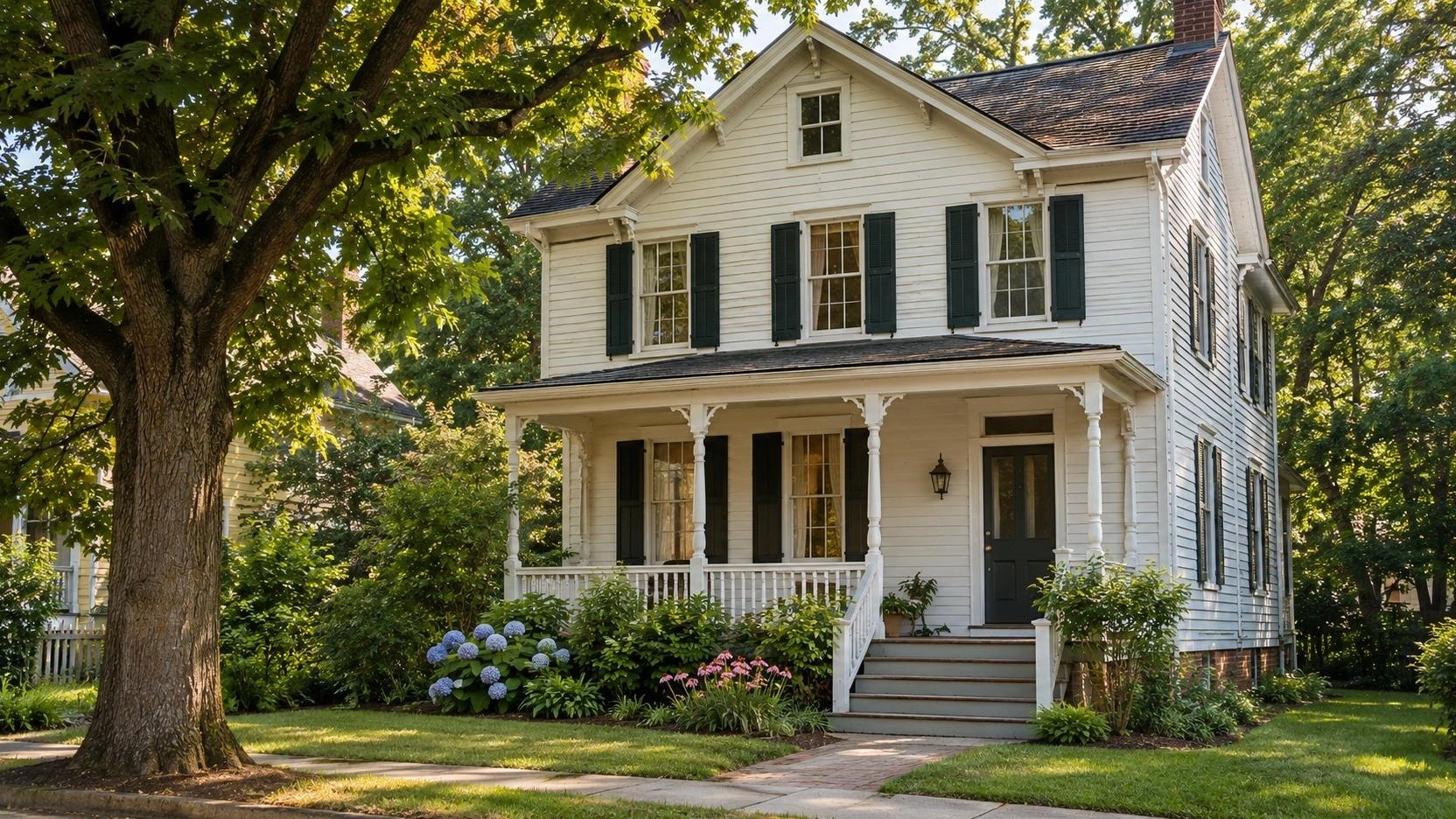
An older home can invite you to imagine both preservation and change. You may appreciate original windows, a distinctive porch, or a carefully proportioned exterior while also wanting modern systems and a layout that suits your routine. Before buying a historic property in Anne Arundel County, investigate how the home’s documented status and location affect those plans. Admiring the architecture and understanding the approval process are equally useful parts of the decision.
The word historic can describe several different things in a listing. It might refer informally to age or character, identify a property in an official inventory, or describe a location within a regulated district. Those meanings should not be treated as identical. Establish the actual status first, then ask the responsible office and qualified professionals how your intended work would be reviewed.
Describe the changes that matter to your purchase
Start with a short list of essential changes and optional ideas. Perhaps you need a functional work area, hope to alter an exterior opening, or want to understand the condition of existing windows. Give each item a purpose. A specific question about a proposed change is more useful than asking generally whether a historic home can be renovated.
Consider whether the existing property meets your needs while the project is being evaluated. If a particular alteration is essential, tell your agent early. That dependency should shape the investigation before you commit to a purchase. If the idea is optional, you may be comfortable proceeding while preserving more flexibility about design and timing.
Avoid assigning value to an unapproved renovation as though it already exists. A rendering can help communicate a concept without proving that the work is feasible, affordable, or authorized. Keep the existing home’s fit separate from the hoped-for result. This allows you to assess the property honestly if the preferred design later needs to change.
Confirm the jurisdiction before using a checklist
The City of Annapolis and Anne Arundel County have distinct preservation and permitting resources. A postal address alone should not be used to decide which process applies. Confirm the property’s jurisdiction and ask the responsible office which records establish its status. Do not apply a city’s historic-district procedure to every older house elsewhere in the county.
Annapolis’s Historic Preservation Division reviews exterior changes in its Historic District. The city’s permit guidance also explains that exterior projects there may need historic approval even when a building permit exemption applies. For a property in that district, ask the city how the actual proposed work should be handled. Do not assume that calling a task maintenance resolves the question.
For properties under county review, Anne Arundel County provides a Historic Properties Inventory and guidance on development involving historic resources. The county encourages owners to contact its preservation staff for property-specific information. An inventory search is a starting point, not a substitute for understanding how a proposed project will be evaluated or what other records may affect the parcel.
Read the property’s status as a set of documents
Request available designation information, inventory references, prior approvals, and relevant recorded restrictions or easements. Ask a qualified attorney to interpret documents affecting legal rights or obligations. A property can have more than one relevant layer of review. Understanding one designation does not necessarily resolve every restriction or approval associated with future work.
Keep each record’s purpose visible. An inventory entry may describe a resource, while an approval may authorize specific work under conditions. A survey may help locate features without determining the full legal or preservation context. The file becomes useful when the records are connected to the questions you are asking, rather than gathered into a folder and treated as interchangeable evidence.
If information is missing or appears inconsistent, seek clarification from the appropriate office and professionals. Avoid assuming that a property is unrestricted because a quick search did not produce a familiar label. Similarly, do not assume that an official reference prohibits every change you might want. The actual status and proposed work need to be considered together.
Keep public designation and private restrictions separate
A public approval process and a recorded private restriction can create different questions. Ask your advisers whether either is relevant to the home. A response from a permitting office may not interpret a private easement or covenant, while a title review may not determine a design’s acceptability under preservation rules. Assign each issue to the appropriate reviewer so that one answer is not stretched beyond its scope.
Inspect condition without confusing age with failure
Arrange a qualified home inspection and discuss whether specialist expertise is needed for the home’s construction and systems. Older materials and details should be evaluated based on their actual condition, not presumed defective solely because they are old. At the same time, attractive original features do not eliminate the need to investigate deterioration or system concerns.
Share available maintenance and renovation records with the inspector. Ask which areas are accessible, which are concealed, and what further evaluation is recommended. A report should distinguish an observed issue from an area that could not be fully assessed. The goal is a realistic understanding of the property, including the limits of the evidence, before planning repairs or improvements.
If work may disturb older finishes or materials, ask qualified professionals what assessment and precautions are appropriate. Do not start scraping, removing, or opening components during a showing to investigate them yourself. Condition review and project planning should be carried out through authorized access and appropriate expertise. The buyer’s curiosity should not become unapproved or unsafe work.
Gather the history of previous renovations
Ask for permits, preservation approvals where applicable, plans, invoices, and available completion records for significant alterations. Identify which documents correspond to the present configuration. A plan for an earlier proposal may differ from the work ultimately performed. Have the relevant professionals explain discrepancies rather than assuming a finished project necessarily matches every available approval.
Read repair descriptions carefully. Replacing one component is not the same as replacing an entire system, and restoring a surface is not necessarily evidence that an underlying issue was corrected. A precise work history supports better inspection questions and more realistic estimates for future work. It also helps prevent a listing phrase such as “fully updated” from becoming your only source of information.
Ask whether any approval conditions or unfinished items remain relevant. If the seller has a pending application, clarify its status and whether it relates to your own plans. An application is not an issued approval, and an approval for one design is not permission for any alternative. Keep each stage accurately labeled throughout the purchase discussion.
Develop options before committing to a design
Speak with a designer or contractor who can address the relevant preservation context and the intended scope. Ask how the proposal would retain important features while meeting your functional goals. A useful consultation may identify several approaches rather than immediately committing to the most visually dramatic change. Alternatives can help you understand which parts of the project are essential and which are flexible.
Ask the responsible preservation office what preliminary guidance or review is available. Supply enough information for a meaningful discussion, while recognizing that informal guidance may not constitute final approval. Document the questions asked and the next steps identified. This helps avoid repeating an early conversation later as though the project had already been authorized.
A hypothetical buyer may want to replace exterior windows but learn that repair or a different design needs consideration. That does not automatically make the home unsuitable. The buyer can evaluate the options, costs, and practical effect on their goals. The decision becomes clearer when it is based on an actual scope rather than a general assumption that every old feature must be replaced.
Build estimates around the approved or reviewable scope
Request proposals that identify materials, methods, access needs, exclusions, and assumptions. A generic renovation estimate may not account for the work appropriate to this property. Ask what information is still needed before the provider can give a dependable price. If approval could change the design, keep that uncertainty visible in the budget rather than presenting an early number as final.
Separate necessary condition work from discretionary improvements. You may be able to sequence projects so the home remains usable while later choices are evaluated, but that requires professional guidance for the actual building. Do not assume a cosmetic preference and an urgent system concern belong on the same timetable. Clear priorities make the estimate and scheduling discussion more useful.
Discuss financing and insurance questions with the relevant professionals before relying on a renovation plan. A purchase loan, project funding, and coverage during work can involve different requirements. Supply accurate information about the property’s condition and intended use. Avoid assuming that a general preapproval or policy quote automatically accommodates every proposed project.
Coordinate the research with the purchase decision
The Mr. Magothy buyer guide outlines the broader transaction. Add status verification, specialist inspections, and project consultations to that framework early. Tell your agent which findings could affect your willingness to proceed. A historic-property investigation can involve several offices and providers, but their review does not automatically extend the purchase agreement’s deadlines.
Review unresolved questions with your agent and obtain legal advice where appropriate. If additional time or a change in terms is needed, ask how it should be requested and documented. Do not assume a seller’s understanding of your renovation plans creates a contractual right to complete the review later. Your decision should reflect the actual agreement and the information available when action is required.
The team’s service-area overview provides context for comparing communities such as Annapolis, Arnold, and Severna Park. Within that broader search, keep each older property’s status and condition distinct. A home’s age, architectural appeal, and location are reasons to investigate thoughtfully, not substitutes for the parcel-specific review.
Preserve a useful record for the next chapter
If you proceed, retain the final property records, professional findings, and relevant approval correspondence. Mark preliminary concepts clearly and keep them separate from issued approvals. Future designers and contractors should be able to identify the current status without reconstructing a series of conversations from the purchase.
Before beginning work, verify current requirements with the responsible offices and confirm that the actual scope is covered. Plans can evolve after moving in, and an earlier discussion may no longer describe the project. A well-researched purchase gives you a clearer starting point: a home you understand, priorities you have tested, and a practical path for considering changes while respecting the property’s documented character and obligations.
FAQs
Does an older home automatically have historic restrictions?
Do not assume either way. Confirm the actual designation, jurisdiction, recorded documents, and proposed work with qualified professionals.
Are Annapolis Historic District rules the same throughout the county?
No. Verify the property’s jurisdiction and applicable process rather than applying one checklist to every address.
Does an old renovation approval cover my new design?
Not automatically. Have the responsible authority explain the document’s scope and what is required for the project you now intend.
Contact Mr. Magothy
Considering a historic home in Anne Arundel County? Contact the Mr. Magothy Real Estate Team at 410-218-3612 to coordinate your search, property records, and renovation-related questions.