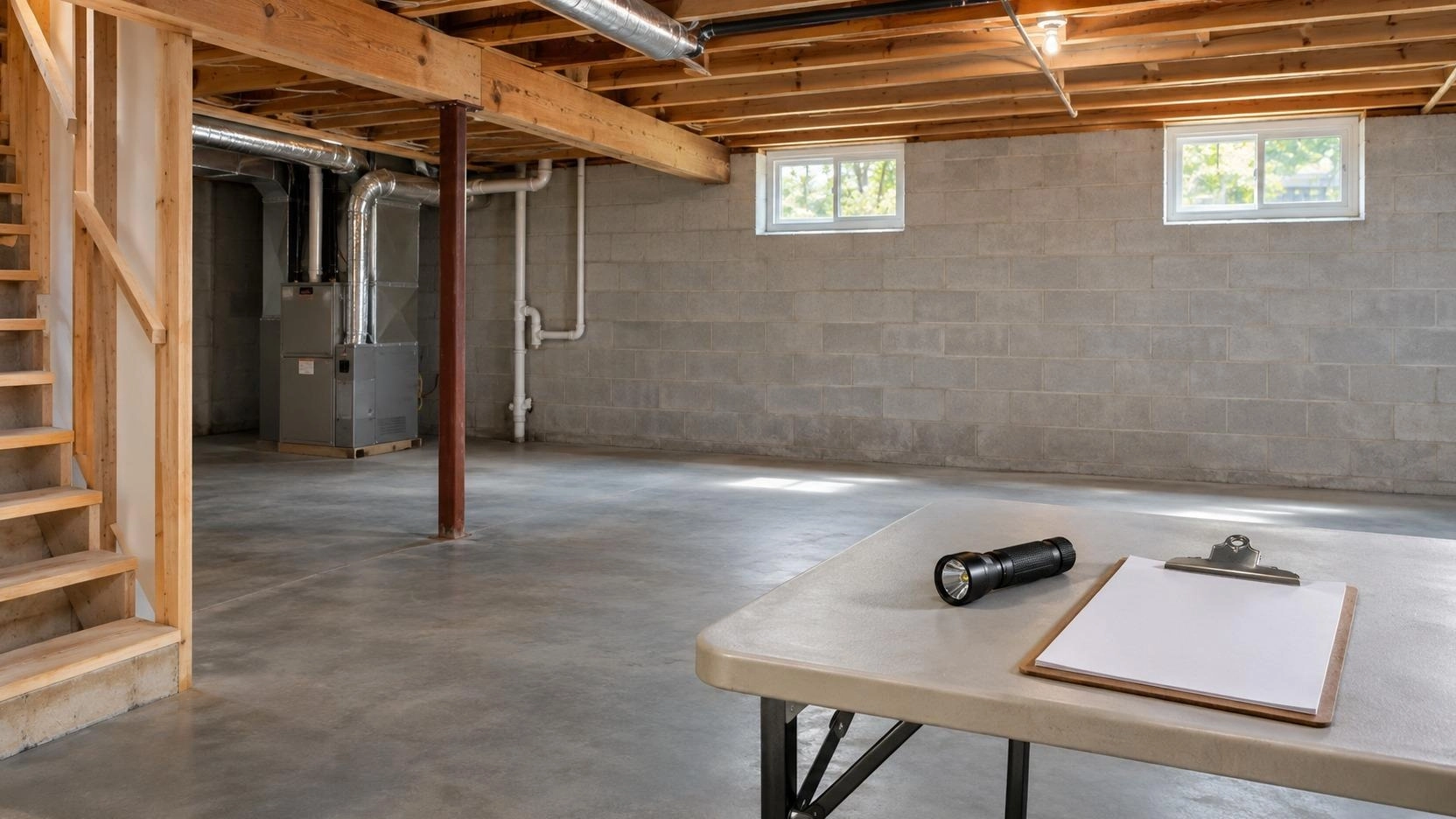
A freshly painted basement can look inviting, while an unfinished crawlspace may barely receive a glance during a showing. Neither appearance tells the complete story about moisture. When buying a Pasadena home, look for a documented understanding of the property’s condition rather than a quick conclusion based on a room’s finish, a dehumidifier, or the weather on the day you visit.
Moisture questions can involve plumbing, exterior water management, building materials, ventilation, or other conditions that require qualified evaluation. The buyer’s task is to notice relevant observations, request the history, and arrange the right follow-up. You should not be expected to identify a cause or prescribe a repair from a photograph. A careful review helps distinguish evidence, explanations, and unresolved questions before you make a purchase decision.
Record observations without turning them into diagnoses
During an authorized showing, note visible staining, damaged finishes, unusual odors, or areas you cannot access. Identify the room and location so the inspector can understand what you observed. Avoid labeling a material as mold or declaring a foundation problem without appropriate evaluation. An observation can be useful even when you do not know what caused it.
Ask permission before photographing conditions, and keep the images with your notes. A picture can help a professional locate the concern, but it should not replace an in-person assessment when one is needed. If an area appears unsafe or access is restricted, do not enter it to obtain a better view. Ask how a qualified inspector can evaluate it appropriately.
The setting near Pasadena’s creeks and waterfront does not establish the source of an interior condition. Nor does an inland address guarantee that moisture questions are irrelevant. The actual building, site, and history deserve attention. Keep location as context while allowing the evidence and qualified investigation to guide conclusions about the property itself.
Request a factual history from the seller
Ask about known water entry, plumbing leaks, drainage concerns, previous evaluations, and related work. Request available reports, invoices, warranties, and photographs through the transaction team. Keep the sequence intact: what was noticed, what was investigated, what was done, and whether anything happened afterward. A record of new flooring alone may not explain the event that preceded it.
Read invoices for scope rather than treating the presence of paperwork as proof that every concern was resolved. A contractor may have repaired a specific component while recommending other work. An estimate may never have become a completed project. If a seller describes the issue as fixed, ask which records support that description and whether further evaluation is still recommended.
A hypothetical example helps show the distinction. A seller may have replaced damaged trim after a plumbing repair. The trim invoice documents restoration, while the plumbing record addresses the reported source. Both can be useful, but neither should be expanded into a guarantee that the entire basement will remain dry under every future condition. Preserve what each record actually says.
Define the home inspection’s scope
Ask the inspector which parts of the basement, crawlspace, attic, and exterior will be evaluated. Confirm how access limitations or concealed areas will be reported. A finished wall can prevent direct observation of what lies behind it, and an inaccessible crawlspace may require a separate arrangement. The report should make those limits clear instead of leaving you to infer that unmentioned areas are problem-free.
Share your observations and the available history before the inspection. This allows the professional to understand the question you want addressed while conducting an independent assessment. Ask whether a specialist is recommended for a particular issue. A general inspection may identify a concern without determining its full extent, cause, or repair scope.
Keep testing methods and technical interpretation with qualified providers. Do not disturb suspicious materials, remove building components, or attempt cleanup to see whether a stain returns during the transaction. EPA guidance cautions that investigating hidden mold can disturb material and spread contamination. The appropriate professional should determine a safe and useful evaluation approach.
Distinguish a moisture source from its visible effects
The Environmental Protection Agency emphasizes addressing moisture problems before converting or remodeling basement space. For a buyer, the practical lesson is to understand the underlying concern before judging a cosmetic repair sufficient. A new finish can improve appearance while leaving unanswered questions about how water or moisture reached the area in the first place.
Ask the evaluating professional to explain the evidence for the proposed cause and any alternative explanations that remain. If the scope is limited, have that limitation stated clearly. You do not need an overly technical report to understand the difference between an observed condition and a confirmed source. A plain-language explanation should identify what is known and what additional work would improve certainty.
Discuss whether the proposed response addresses the source, affected materials, or both. Those can be separate scopes performed by different providers. A plan that only describes repainting should not be mistaken for a complete moisture correction. Conversely, a corrected source may still leave material-condition questions that deserve evaluation before the space is used as intended.
Avoid relying on one device as the whole explanation
A dehumidifier, sump pump, or other device may be part of a property’s management approach. Ask why it is present, what it is intended to do, and what maintenance or service information is available. Its presence does not automatically establish a defect, and its operation does not automatically establish that all moisture concerns are resolved. The relevant professional can explain its role within the actual system.
Look at the relationship between the house and the site
Ask the inspector whether exterior conditions warrant further review. Roof drainage, ground conditions, hard surfaces, and other site features may be relevant, but the cause should not be inferred casually. A qualified provider can identify which observations deserve investigation and whether an additional specialist is needed. Avoid creating your own repair plan from a list of possible causes.
If a proposed correction changes grading, drainage, vegetation, or exterior construction, ask what approvals and professional design are required. This can be especially important when a Pasadena property has environmental protections or other site constraints. A contractor’s suggestion should be evaluated for the actual parcel rather than treated as permission to redirect water or alter a protected area.
Do not assume that a solution used at another home will work here. Two basements may display similar staining for different reasons, and two yards may have different constraints. The value of a property-specific assessment is that it connects the observed condition to an appropriate response. A generic product recommendation cannot provide that connection on its own.
Evaluate intended living space separately
If you plan to use a basement as an office, recreation area, or another occupied space, explain that intended use to your professionals. Ask what condition and approval questions need attention before relying on the area for that purpose. A room’s furniture or marketing description does not necessarily establish its approved use or resolve the requirements for a future conversion.
Keep moisture evaluation separate from other questions such as permitted work, electrical condition, and appropriate access. A favorable answer in one category does not complete the others. The goal is a coordinated picture of the space you intend to use, rather than a single report being asked to support conclusions beyond its scope.
The team’s Pasadena overview can help orient your search in the community. When comparing individual homes, examine how much usable space is actually supported by the records and professional findings. A large finished lower level should be evaluated on its documented condition and status, not simply counted as flexible space because it looks comfortable in listing photographs.
Turn recommendations into a practical decision
When further work is recommended, ask for a defined scope and identify the qualified provider responsible. Request an explanation of what must be investigated before a reliable estimate can be made. A broad cost range may help frame a conversation but should not be presented as the final expense for this property. Keep unknown conditions visible in any budget discussion.
Compare proposals carefully if more than one provider is involved. One may address water entry, another affected materials, and another finishes. A lower total does not necessarily represent the same work. Ask each provider to state exclusions, assumptions, and any follow-up evaluation recommended. This makes the decision clearer and reduces the risk of assuming a complete solution where only one part has been priced.
Discuss findings with your agent while the relevant contractual options remain available. The Mr. Magothy buyer guide offers a broad transaction framework, but the actual agreement determines rights and deadlines. A report does not automatically require a concession or extend the review period. Any negotiated work should identify what is to be done and how completion will be documented.
Verify agreed work without overstating the result
If the seller agrees to a repair, collect the relevant records and ask whether professional follow-up is needed. An invoice may establish that a provider performed specified work, while a separate evaluation may be needed to address remaining concerns. Do not reduce several distinct requirements to a general statement that the issue has been handled.
Preserve warranties and their terms where available, but keep them separate from condition findings. A warranty does not necessarily cover every future event or every component of a problem. Ask the provider to explain any transfer process, exclusions, and claim procedure relevant to the buyer. The documents should support a realistic understanding of the responsibility you are accepting.
Keep useful records for the first season of ownership
After closing, retain the history, reports, and service recommendations in a property file. Ask qualified providers what ongoing observation or maintenance is appropriate for the installed systems and completed work. If a concern recurs, the prior record can help a professional understand the sequence without requiring you to reconstruct the purchase investigation from memory.
A careful moisture review does not promise a home that will never need attention. It helps you decide with better information about current conditions and unresolved limitations. For a Pasadena buyer, that is a practical foundation: understand the evidence, obtain appropriate professional interpretation, and choose the property with a clear view of both its appeal and its responsibilities.
FAQs
Does fresh paint prove a basement moisture issue was corrected?
No. Ask for the relevant history, repair scope, and professional findings rather than relying on appearance.
Should I disturb a stained material to inspect behind it?
No. Have a qualified professional determine the appropriate evaluation method and any safety precautions.
Can a general inspection answer every moisture question?
Not always. Confirm its scope and ask what specialist review is recommended for unresolved findings or inaccessible areas.
Contact Mr. Magothy
Evaluating a Pasadena home with basement or crawlspace questions? Contact the Mr. Magothy Real Estate Team at 410-218-3612 to coordinate the records and professional reviews needed for an informed purchase.